 Ọmọ Oòduà Naija Gist | News From Nigeria | Entertainment gist Nigeria|Networking|News.. Visit for Nigeria breaking news , Nigerian Movies , Naija music , Jobs In Nigeria , Naija News , Nollywood, Gist and more
Gbajúgbajà tí olórun fún ní èbùn tí ó bùáyà, tí a mò sí òòsà obìnrin ti ilè Roman lo sí ibi ayeye ìgbéyàwó alárédè ti Oritsefemi àti Nabila Fash pèlú àyà rìwòwò tí olórun fún lo sí ibi ayeye ìgbéyàwó ìbílè Oritsefemi ní Lekki ní ìlú Eko.


Gbajúgbajà tí olórun fún ní èbùn tí ó bùáyà, tí a mò sí òòsà obìnrin ti ilè Roman lo sí ibi ayeye ìgbéyàwó alárédè ti Oritsefemi àti Nabila Fash pèlú àyà rìwòwò tí olórun fún lo sí ibi ayeye ìgbéyàwó ìbílè Oritsefemi ní Lekki ní ìlú Eko.
Tagged with: Àṣà Yorùbá


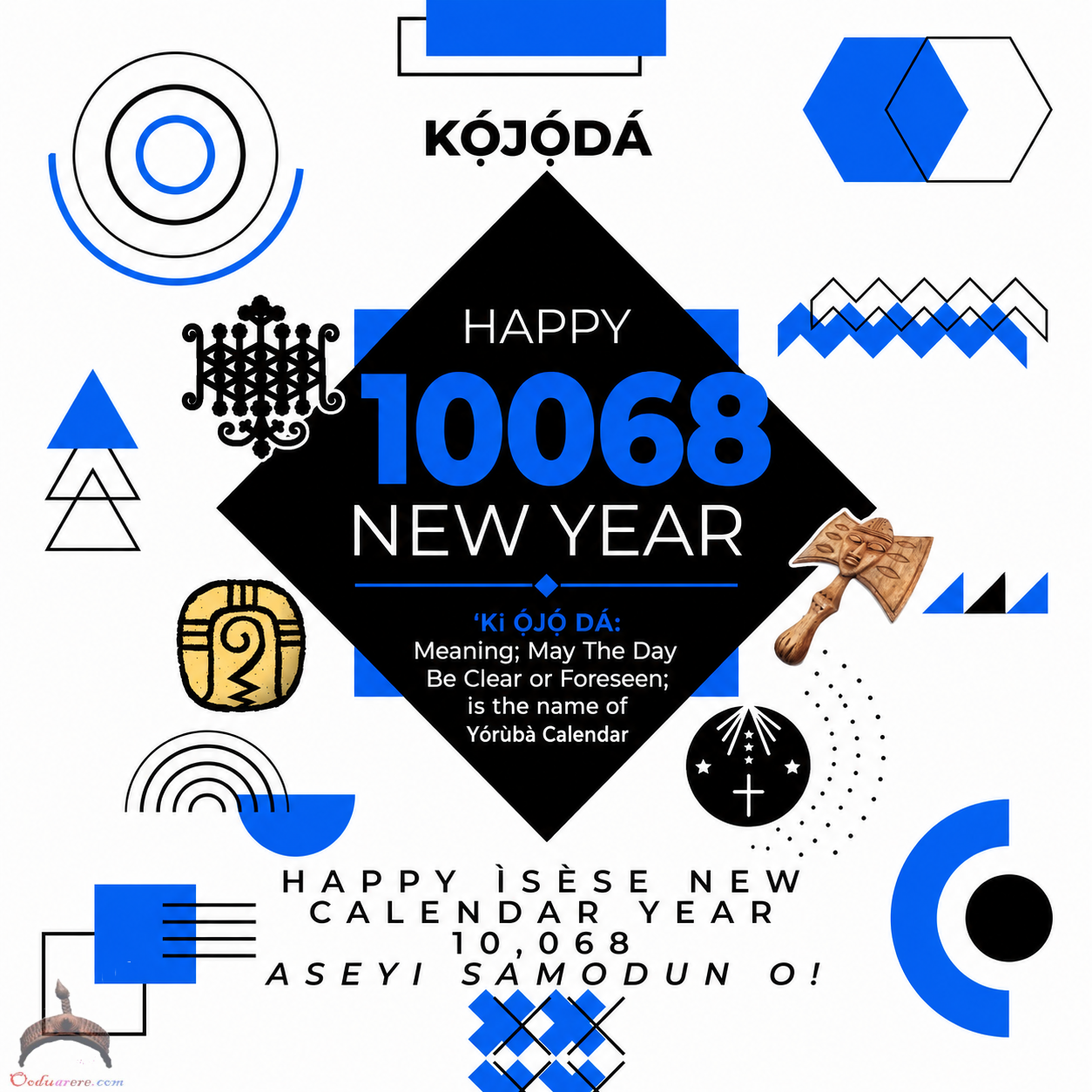
The Yoruba traditional calendar, called Kọ́jọ́dá, starts the new year on June 3rd and ends on June 2nd the following year. It’s a lunar calendar with a 4-day week (each day honoring different Orisa), 7 weeks in a month, and 13 months in a year—so their year is 364 days long. The months and weeks are deeply tied to farming cycles, moon phases, and religious rituals.The traditional Yoruba week has four days. The four days that are dedicated to the ...