 Ọmọ Oòduà Naija Gist | News From Nigeria | Entertainment gist Nigeria|Networking|News.. Visit for Nigeria breaking news , Nigerian Movies , Naija music , Jobs In Nigeria , Naija News , Nollywood, Gist and more

MOREMI AND BANDITRY
History teaches us that the banditry the Yoruba people are experiencing today is not new.
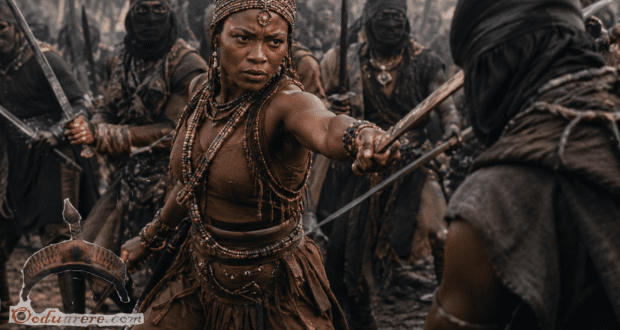
Long ago, the people of Ile-Ife lived under constant attack from a group of raiders known as the Ugbo.
To be clear, the Ugbo were not the same as the Igbo, the present-day people who live east of Odò Ọya.
The Ugbo attacks were unpredictable. No one knew exactly when they would strike. The only certainty was that they would come.
Whenever the Ugbo raided Ile-Ife, they killed many people, carried others away into slavery, and seized some of the most beautiful Ife women, forcing them into marriage—an experience that some compare to the kidnappings and abductions occurring in parts of Nigeria today.
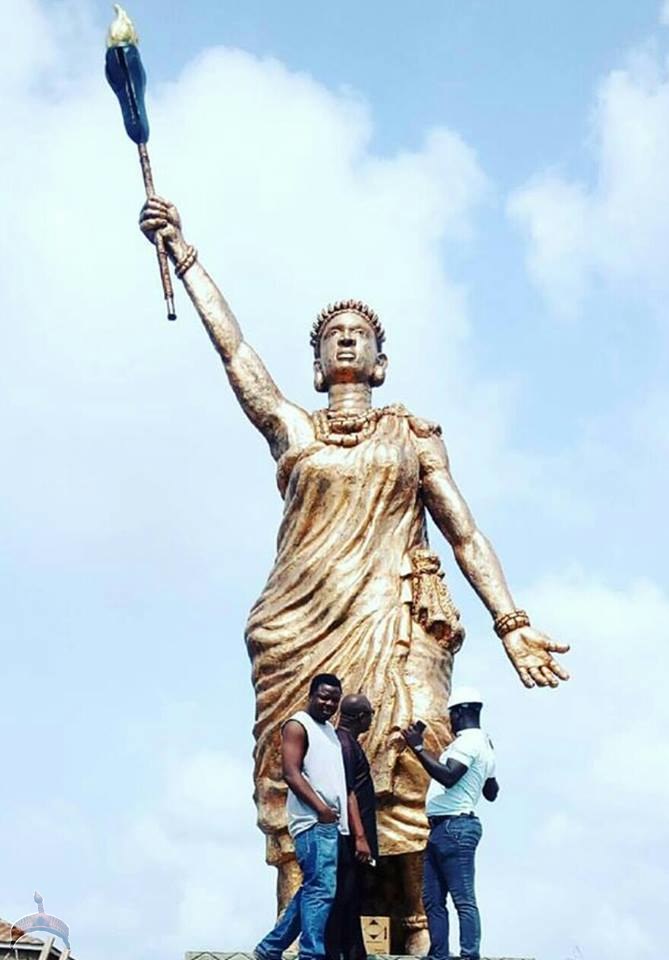
Anyone familiar with Ile-Ife knows that Ife women have long been celebrated for their beauty. According to tradition, this was one of the reasons the city attracted repeated attacks. The Ugbo would raid, inflict great losses, then disappear long enough for the people of Ife to recover before returning again. Among the people of Ife was a woman named Moremi, renowned for her beauty and intelligence.
She had survived several Ugbo raids. She knew how to hide and avoid capture, but she also knew that simply surviving was not enough. The people of Ife feared the Ugbo because the raiders disguised themselves as Egungun spirits. In a society deeply rooted in spirituality, many believed they were being attacked by Ará Ọ̀run—beings from Ọ̀run—rather than ordinary human beings.
It was like the Fulani bandits arming themselves with AK47 and other explosives, arriving like a cyclone on motorcycles.
Whenever the raiders appeared, panic spread through the city. One day, as the Ugbo approached the gates of Ile-Ife, the town criers sounded the alarm. People fled in all directions.
Moremi chose not to run.
She suspected that the Ugbo were using a deception, and she wanted to discover it. She reasoned that her beauty would protect her from immediate death. Instead of killing her, the raiders would likely take her captive and present her to one of their leaders.
Her calculation proved correct. The Ugbo captured her and presented her to their ruler. Moremi adapted to her circumstances. She observed carefully, listened attentively, and waited for an opportunity. One day, while serving her captor burukutu guinea-corn beer, she encouraged him to talk.
“Your people are naïve,” he boasted.
“Why do you say that?” Moremi asked.
“You flee whenever you see us,” he replied. “Can’t you see that we are not Ará Ọ̀run? We are ordinary people wearing raffia disguises. Throw a burning ember at us and the entire costume will catch fire.”
Moremi never forgot those words.
She got the king drunk, slashed his throat, jumped into his clothes and escaped from Ugboland.
Going directly to the palace, she revealed what she had learned.
“Fire is all we need,” she said. “If we prepare properly, their disguises will become their weakness.”
The people of Ife organized themselves. They prepared long palm-kernel torches and positioned defenders along the routes the raiders usually followed.
Before long, the Ugbo returned.
This time, the defenders did not flee.
They advanced with their torches ablaze.
The raffia costumes of the invaders caught fire, throwing the attackers into confusion. The Ugbo retreated in disarray, unprepared for organized resistance.
According to tradition, that was how Ile-Ife freed itself from the menace of Ugbo raiding.
The story of Moremi remains a powerful lesson: communities can overcome persistent threats through intelligence, research, preparation, courage, and collective action.
History reminds us that fear alone never ends insecurity.
Knowledge, organization, and determination often prove to be the most effective defenses.
Yoruba people, panic not.
Organize.