 Ọmọ Oòduà Naija Gist | News From Nigeria | Entertainment gist Nigeria|Networking|News.. Visit for Nigeria breaking news , Nigerian Movies , Naija music , Jobs In Nigeria , Naija News , Nollywood, Gist and more

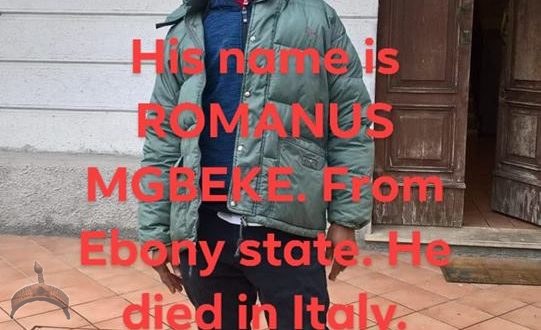
Èyí bani ní inú jé púpò, arákùnrin tí ó jé omo orílè èdè Nìjíríà yí ti kú pèlú àwon mókànlà míràn ní inú ìjàmbá okò tí ó selè ní Foggia ní ilè Italy.
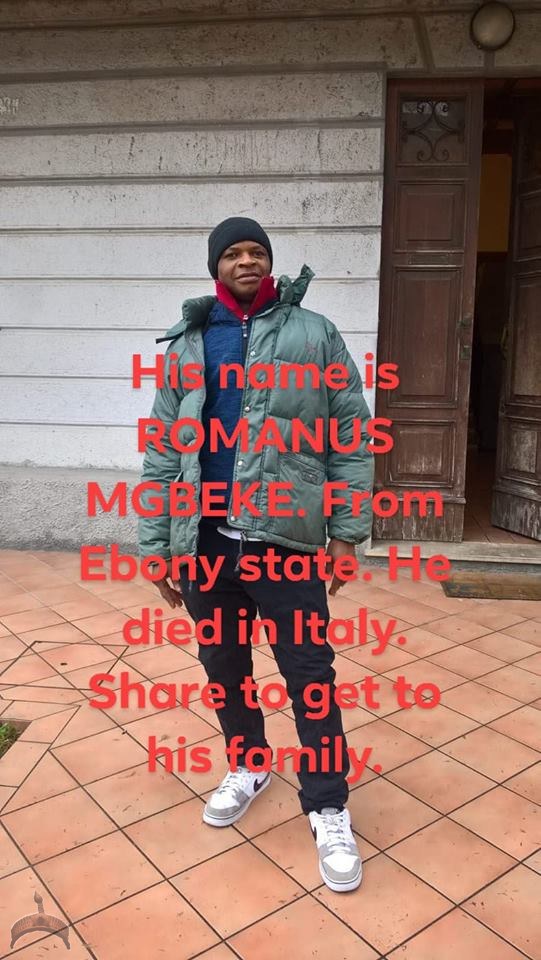
Gégé bí ìròyìn se so, olóògbé yí, orúko rè a máa jé Mr.Roman Mgbeke láti ìpínlè Ebonyi, tí ó lo sí ibi isé pèlú àwon mókànlá míràn tí kú sùgbón tí won sàgbákò ìjàmbá okò tí méjìlá sì kú nínú won .
Àwon ebí rè kò tí gbó ìsèlè yí, e jòwó e báwa pín àwòrán yí tí won yóò fi ri.








???