 Ọmọ Oòduà Naija Gist | News From Nigeria | Entertainment gist Nigeria|Networking|News.. Visit for Nigeria breaking news , Nigerian Movies , Naija music , Jobs In Nigeria , Naija News , Nollywood, Gist and more

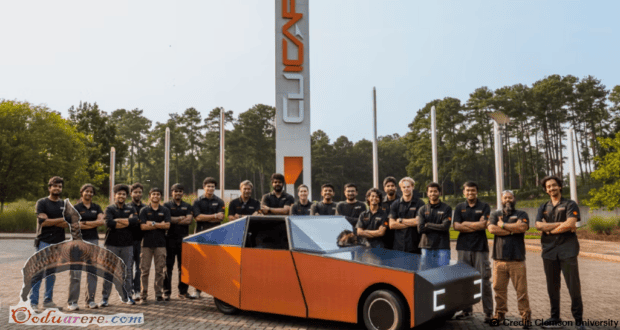
It functions after being covered in 1,700 solar cells.In contrast to a 12-mile commute, Deep Orange 17, also known as the Luminetta, weighs 1,212 pounds and generates 31 miles of solar range every day. The panels were created by Fraunhofer ISE. It will be at CES in 2027.
For BMW, Clemson students created the Luminetta, a 1,212-pound solar electric vehicle with 1,700 cells that can travel 31 miles per day. Energy-efficient for a commute of 12 miles. CES in 2027.
BMW tasked Clemson University graduate students with creating an electric car that produces more energy than it uses during a typical urban commute.
They have a functional prototype after two years. Developed in collaboration with the Fraunhofer Institute for Solar Energy Systems, the Deep Orange 17, also known as the Luminetta by BMW, is a two-seat solar EV with over 1,700 photovoltaic cells. It weighs 1,212 pounds and generates enough solar energy to replenish 31 miles of range per day—more than twice the team’s threshold of 12 miles per day.
Inspired by a box fish, the vehicle’s form maximizes solar surface area. There are panels on almost every square inch of the outside. The cells gather energy in traffic, while driving, and while parked.
Energy in shade can also be captured by Fraunhofer’s panels. The orange hue is a component of a long-lasting barrier that covers the cells. Aluminum, carbon fiber, steel for the passenger cell, and 3D-printed metal joints are used in the lightweight structure. Beyond the solar harvest, regenerative braking and optimized torque distribution add to the energy savings.
This isn’t a product; it’s a prototype. BMW does not intend to market a solar-powered vehicle. However, the study shows that energy-positive driving is physically possible if the commute is short enough and the car is light enough.
For decades, businesses like Lightyear and Sono Motors have failed to make the economics work at scale, making it difficult for solar-powered automobiles to go from concept to manufacturing.
By not attempting to be a genuine car, the Luminetta avoids that issue. In terms of proof of concept, it is successful. The car will be on exhibit during the 2027 CES in Las Vegas. Lightyear went bankrupt after promising a solar EV that could run for months without needing to be charged. The Luminetta may be effective because it doesn’t make any commercial claims. For BMW, the lesson is more limited but still applicable: solar integration can significantly increase range on lightweight platforms, even though it isn’t yet feasible to take the place of a charging cable on anything that consumers would really purchase.