 Ọmọ Oòduà Naija Gist | News From Nigeria | Entertainment gist Nigeria|Networking|News.. Visit for Nigeria breaking news , Nigerian Movies , Naija music , Jobs In Nigeria , Naija News , Nollywood, Gist and more

Over the course of the night of June 9 and 10, the United States conducted massive strikes against Iran; in retaliation, the Islamic Republic attacked three American bases in the Middle East.
The strikes were executed “at the Commander in Chief’s direction in response to yesterday’s downing of a U.S. Army Apache helicopter.”
The command further stated that U.S. Air Force and Navy fighter jets used precision munitions to target Iranian air defense, ground control stations, and surveillance radar sites near the Strait of Hormuz. The military operation was described as a “proportional response to recent attacks on U.S. forces and international commercial ships transiting regional waters.”
“U.S. forces remain vigilant and postured to defend against unjustified Iranian aggression,” CENTCOM concluded.
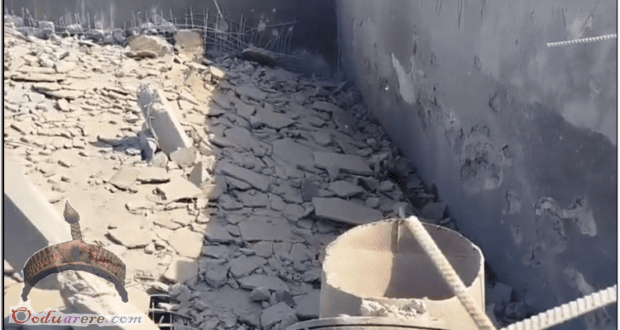
Iranian media reported hearing explosions in the eastern regions of Hormozgan Province. Both the province’s island of Qeshm in the Strait of Hormuz and the city of Sirik in Hormozgan reported strikes. Water storage tanks were destroyed in Sirik.
The Islamic Revolutionary Guard Corps (IRGC) of Iran declared in separate statements over the next few hours that it had attacked the U.S. Navy’s Fifth Fleet headquarters in Bahrain, unidentified targets at Ali Al Salem Air Base in Kuwait, and F-35 Lightning II stealth fighter jet shelters and a command-and-control center at Al-Azraq Air Base in Jordan. One-way attack drones and ballistic missiles were employed.
The guards also announced that it had shot down an American MQ-9 Reaper close to the Strait of Hormuz using a “modern air defense system.”
The IRGC cautioned that Iranian troops are still ready to provide a “decisive and crushing response” to any additional attacks and stated that the United States would bear the repercussions of any future military action.
“If these hostile actions continue, even heavier responses are on the way,” the guards said in one of the statements.
Citing “satellite images and information sent by field sources to Iran’s foreign intelligence service,” an Iranian military official subsequently claimed the Fars News agency that 70% of the targets had been hit.
However, almost all of the missiles and drones fired by the Islamic Republic toward American military installations in the area were intercepted, according to Reuters, which cited preliminary U.S. intelligence assessments. Only four missiles were fired, according to the news agency.
Compared to earlier rounds of violence during the ceasefire, the conflict was more widespread. But since no casualties have been reported, no further escalation is anticipated.
However, if efforts to reach an agreement between the United States and Iran continue to stall, the area may soon return to full-scale conflict.